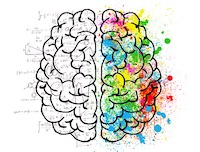

In her book Mindset: The New Psychology of Success, Carol Dweck talks about the difference between the Growth and Fixed mindsets. I’d encourage you to read her words on this, but in a nutshell, people with a growth mindset believe that their intelligence can expand and develop, whereas people with a fixed mindset believe that intelligence is fixed and what you’ve got now is all you’re getting.
The interesting point, at least for this article, is how people developed one or the other of these mindsets.
They found that children praised on their intelligence (ie “you’re so smart”) developed a Fixed Mindset. They did more poorly on future tasks, gave up more easily and when given a choice of working on easy or hard problems, picked the easy ones.
Children praised on the effort they put in (ie “you really worked hard on that one”) developed a Growth Mindset. They were more successful, persevered more with challenging tasks and when given a choice of easy or hard problems, picked the harder ones.
As you’ve probably already deduced, people with a growth mindset significantly outperform people with a fixed mindset.
I was reminded of this when my friend Stacey made this observation on LinkedIn: I think I’ve gone from Sonnet telling me “you’re absolutely right” all the time to Opus telling me my ideas are “smart.”
Notice that in both cases, the AI is praising how smart she is, not how much effort was put in. This will directly encourage a fixed mindset in those who hear this messaging on a regular basis.
I would expect it to be fairly easy to tell these tools to not praise us in that way. The fact that this is the default behaviour is certainly troubling though.
The language we use is critically important, and affects us far more than we think.